“Reprogramming Pain: How Predictive Coding Shapes Modern Fibromyalgia Rehab”
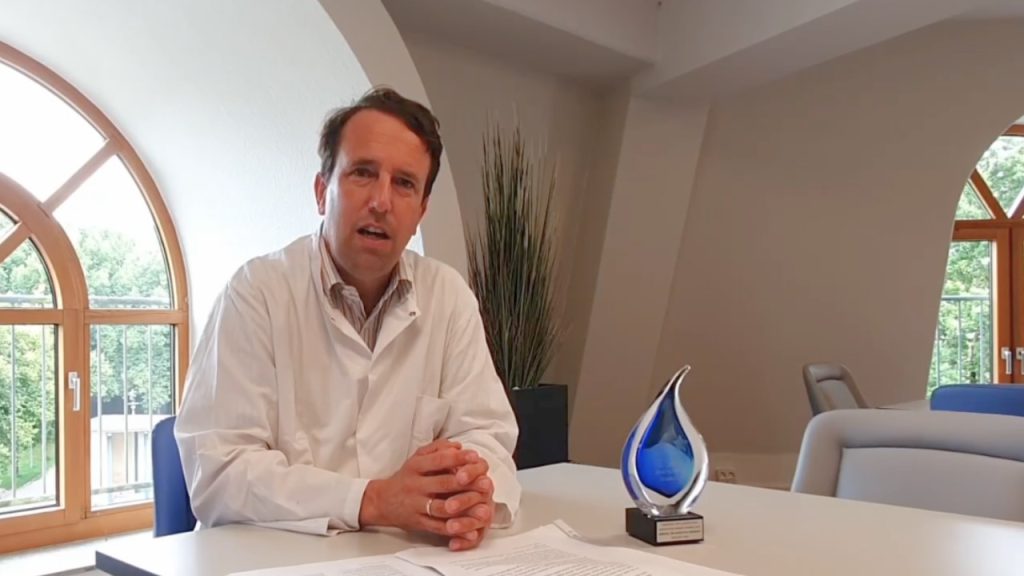
An interview with Dr. Martin Gehlen, Rheumatologist and Chief Physician of the Fürstenhof Klinik, Staatsbad Pyrmont, Germany – Special Jury Winner of the ESPA Innovation Awards in the category Innovative Spa Research
1. “Fibromyalgia patients with severe symptoms are often told nothing works for them. Your three-week programme proves otherwise. What’s the key to reaching this particularly difficult-to-treat group?”
One very important task of rehabilitation is to give patients back the feeling of self-efficacy. When a person is suffering from severe pain, exhaustion and sleep disorders, it is disastrous if they feel that none of the possible measures are having any effect. In psychology, the term self-efficacy is used. This means that a person has the confidence that certain measures will lead to an improvement. The topic of self-efficacy is not only found in the field of health, but runs through all areas of life. A person who has the basic attitude that they can achieve anything if they work hard enough will cope better with health restrictions than a person who feels that they cannot do anything about the restrictions and is passively at their mercy.
The 6-minute walk test is a simple method that we use in our clinic, along with many other methods, to show people that they are very much capable of taking control of their own destiny.
“Even small steps, like the 6-minute walk test, can help patients rediscover their ability to influence their own health.”
Dr. Martin Gehlen
2. “Your programme is based on neurocognitive models like ‘predictive coding’. Can you explain that in simple terms? How do you change the brain’s perception of pain, fatigue and effort?”
Our brain makes predictions that influence how we evaluate stimuli. Our perception is therefore by no means objective, but is influenced by experience and expectations. In concrete terms, this means that people with severe chronic pain syndromes (e.g. fibromyalgia) often associate physical activity primarily with pain. The aim of our programme is to change the assessment of sporting activity through a sense of achievement at the end of a strenuous 3-week rehabilitation programme. The goal is for this sporting activity to be assessed positively because it leads to an improvement in overall fitness.